
The Gifts of the Holy Spirit – Purpose


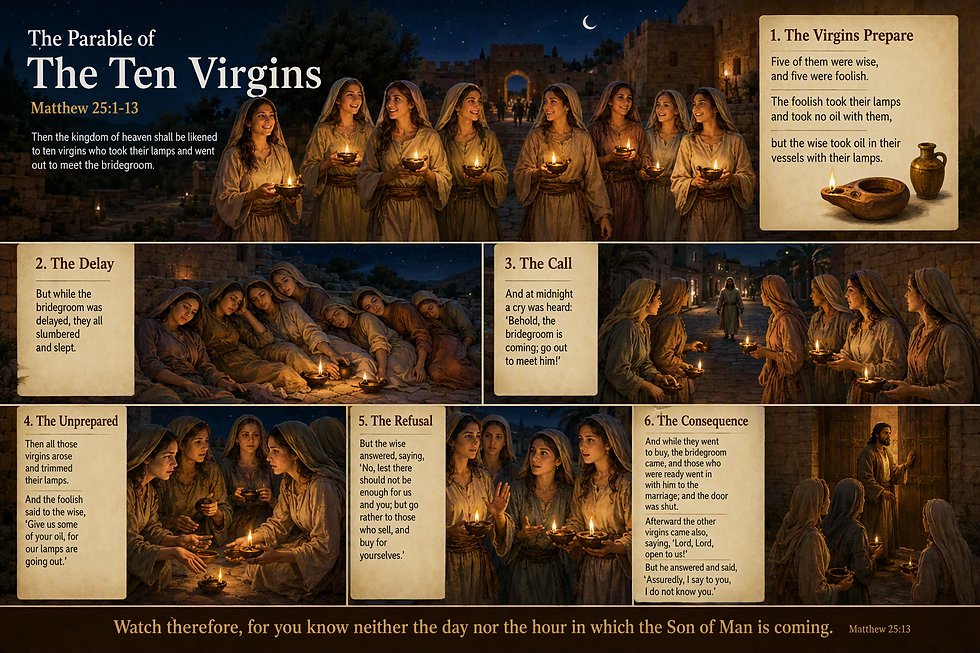
In my Bible study post on the Parable of the Ten Virgins, I introduced the term betrothal. In Jewish tradition and some Eastern cultures, betrothal is a formal pre-wedding commitment in which the bridegroom’s family presents gifts to the bride’s family to seal the relationship. You can read my post on the “Ten Virgins” to better understand this ceremony.
I previously used the story of Joseph and Mary to illustrate how they were both betrothed but not married before Mary conceived supernaturally. This is another similar account in the Bible.
In Genesis 24, Abraham sends his most trusted servant to find a wife for his son Isaac from among his own relatives rather than from the Canaanites. The servant sets out with valuable gifts and provisions. When he arrives at a community well, he prays to God for guidance:
“O Lord, God of my master, Abraham,” he prayed. “Please give me success today, and show unfailing love to my master, Abraham. See, I am standing here beside this spring, and the young women of the town are coming out to draw water. This is my request. I will ask one of them, ‘Please give me a drink from your jug.’ If she says, ‘Yes, have a drink, and I will water your camels, too!’—let her be the one you have selected as Isaac’s wife. This is how I will know that you have shown unfailing love to my master.”
Genesis 24:12–14 [NIV]
Rebekah responds exactly as the servant had prayed, offering him water and willingly drawing water for his camels. Recognising God's providence, the servant gives her a gold nose ring and two gold bracelets. These gifts become part of the process of establishing the marriage agreement between Rebekah and Isaac.
In a similar way, the spiritual gifts we receive are not merely blessings to enjoy but responsibilities entrusted to us as members of the body of Christ. They should reflect our commitment to Christ and our desire to serve His Church.
Before exploring the purpose of these gifts, however, we must understand the importance of spiritual growth and character.
Character vs. Spiritual Gifts
Our character shapes us into the likeness and image of Christ. Through spiritual maturity, we begin to understand God's heart, not only towards ourselves but also towards others. Without this inner transformation, spiritual gifts can become dangerous.
I cannot emphasise enough the importance of building godly character alongside, and above the pursuit of, spiritual gifts. Spiritual maturity should be the foundation of everything we do in our walk with Christ.
Consider what happens when someone exercises spiritual gifts without having a heart for people. If a person lacks compassion for the suffering of others but enjoys operating in spiritual gifts, the influence and recognition they receive can eventually lead to pride. In some cases, dramatic spiritual gifts can even serve to mask character flaws.
For example, imagine someone who struggles with dishonesty but claims to have the gift of prophecy. Without integrity and spiritual accountability, that person could misuse prophetic words to manipulate others for personal gain.
When we exercise the gifts of the Spirit without developing the fruit of the Spirit, we risk producing bad fruit through something God intended for good.
Scripture gives us a clear warning:
“By their fruit you will recognise them.”
Matthew 7:16 [NIV]
You can also read my blog, “How to Identify a True Prophet”, to understand the importance of discerning genuine spiritual character.
Jesus gives an even stronger warning:
21 “Not everyone who says to Me, ‘Lord, Lord,’ shall enter the kingdom of heaven, but he who does the will of My Father in heaven. 22 Many will say to Me in that day, ‘Lord, Lord, have we not prophesied in Your name, cast out demons in Your name, and done many wonders in Your name?’ 23 And then I will declare to them, ‘I never knew you; depart from Me, you who practice lawlessness!’
Matthew 7: 21- 23 [NKJV]
Spiritual gifts do not exempt us from living according to God's standards. A person can exercise spiritual gifts and still walk in lawlessness. We must never assume that God's moral standards no longer apply simply because we live under grace. Jesus makes it clear that exercising spiritual gifts is not a substitute for obedience and a genuine relationship with Him.
I cannot emphasise enough how important it is to grow spiritually and develop Christlike character rather than focusing solely on operating in spiritual gifts.
The Purpose of Spiritual Gifts
Why, then, does God give spiritual gifts to believers?
Spiritual gifts are not earned; they are freely given by God according to His sovereign will. We receive them by grace through faith.
Paul explains:
"Now to each one the manifestation of the Spirit is given for the common good."
1 Corinthians 12:7 [NIV]
As Paul explains, spiritual gifts are given for the common good of the body of Christ. They are not intended for personal recognition, status or benefit but for the strengthening and edification of fellow believers.
One of the most important ways we contribute to the body of Christ is by building others up rather than tearing them down through gossip, slander, anger, criticism and grumbling. This requires a heart transformed by Christ. We live in a fallen world where human nature often inclines us towards tearing others down rather than encouraging them.
Jesus reminds us that the way leading to life is narrow and difficult, and few find it (Matthew 7:14). As our hearts become more aligned with His, we learn to reflect His light through our words and actions. We become more concerned with strengthening others than seeking our own recognition. This is the heart with which spiritual gifts should be exercised.
Once your heart reflects the light of Jesus and builds another person up, grace overflows, and the Holy Spirit begins to manifest his gifts through you.
Secondly, spiritual gifts are the manifestation of the Holy Spirit.
"Now to each one the manifestation of the Spirit is given for the common good."
1 Corinthians 12:7 [NIV]
In my blog post, "Holy Spirit: The Indwelling Person", I explained who the Holy Spirit is and His role in our lives. The gifts listed by Paul are manifestations of the Holy Spirit working through believers.
Although the Holy Spirit is invisible, we can witness His work through the manifestation of these gifts. However, the absence of a visible spiritual gift does not mean that a believer does not have the Holy Spirit. When we repent and accept Jesus Christ as our Saviour, the Holy Spirit comes to dwell within us.
The book of Acts provides wonderful examples of the manifestation of the gifts of the Spirit. As we read through Acts, we see how the disciples grow in faith and boldness, becoming witnesses to God's power and the message of Jesus Christ. But it all starts with their spiritual maturity and Christ-like character.
Thirdly, spiritual gifts strengthen our testimony of Christ within the Church.
Paul also reminds the Corinthian church of the grace they received through Christ:
"I thank my God always concerning you for the grace of God which was given to you by Christ Jesus, that you were enriched in everything by Him in all utterance and all knowledge, even as the testimony of Christ was confirmed in you, so that you come short in no gift, eagerly waiting for the revelation of our Lord Jesus Christ, who will also confirm you to the end, that you may be blameless in the day of our Lord Jesus Christ."
1 Corinthians 1:4–8 [NKJV]
Spiritual gifts are not badges of honour or merit points that we collect to demonstrate our spirituality. Rather, they testify to who God is and what He can accomplish through us.
Through the life, servanthood and selfless sacrifice of our Lord Jesus Christ on the cross, we are saved by His grace and mercy. This is the message our lives should demonstrate as we exercise our gifts. When we put others first and serve selflessly, we reflect the character of Christ and strengthen the testimony of the Gospel.
Final Thoughts
The gifts of the Holy Spirit are not earned; they are divine gifts given by God for the common good and edification of the Church. They are distributed according to God's sovereign will and received through faith.
Paul reminds us:
“How is it then, brethren? Whenever you come together, each of you has a psalm, has a teaching, has a tongue, has a revelation, has an interpretation. Let all things be done for edification.”
1 Corinthians 14:26 [NKJV]
God's gifts and calling are irrevocable (Romans 11:29). However, this does not mean we are free from accountability for how we exercise them. We must remember that spiritual gifts are entrusted to us, not given to elevate our status or make us superior to others.
The dangers of misusing spiritual gifts include pride, self-reliance, boasting, looking down on others, intimidation and manipulation. These were among the problems in the church at Corinth, where believers were misusing their gifts, creating division and failing to build one another up.
Paul therefore reminds us:
“For by the grace given me I say to every one of you: Do not think of yourself more highly than you ought, but rather think of yourself with sober judgment, in accordance with the faith God has distributed to each of you.”
Romans 12:3 [NIV]
We must also recognise that God distributes different gifts to different people. Paul explains:
“We have different gifts, according to the grace given to each of us. If your gift is prophesying, then prophesy in accordance with your faith; if it is serving, then serve; if it is teaching, then teach; if it is to encourage, then give encouragement; if it is giving, then give generously; if it is to lead, do it diligently; if it is to show mercy, do it cheerfully.”
Romans 12:6–8 [NIV]
No gift makes one believer greater than another. Each gift has a purpose, and each of us has a responsibility to exercise our gifts faithfully and humbly.
Humility is essential in the life of every believer, particularly those in spiritual leadership. It protects us from pride and reminds us that everything we have comes from God's grace. Spiritual gifts should never become a measure of our spiritual worth or maturity. Rather, our character, love and willingness to serve should reflect our growth in Christ.
Ultimately, love must be the foundation and motivation behind every spiritual gift. Paul makes this very clear:
“Follow the way of love and eagerly desire gifts of the Spirit, especially prophecy.”
1 Corinthians 14:1 [NIV]
We should eagerly desire the gifts of the Spirit, but never pursue the gifts at the expense of developing Christlike character. The gifts are given to build up the Church, while love ensures that we use them in a way that honours God and serves others.
Let's Pray:
Dear Lord, thank you for trusting us with your spiritual gifts. Help us remain faithful and accountable as we exercise them for the edification of your Church. Teach us to grow in godly character, humility and love, and not seek recognition through spiritual gifts. May everything we do reflect the heart of Christ and bring glory to your name. In Jesus' name, Amen.


Comments